
Die Casting
Process
Introduction
Of all metal fabrication methods, die casting represents the shortest distance between molten metal and finished part. For sound economic and functional reasons, die casting outperforms stamping, sand casting, forging and screw-machine production in many applications.
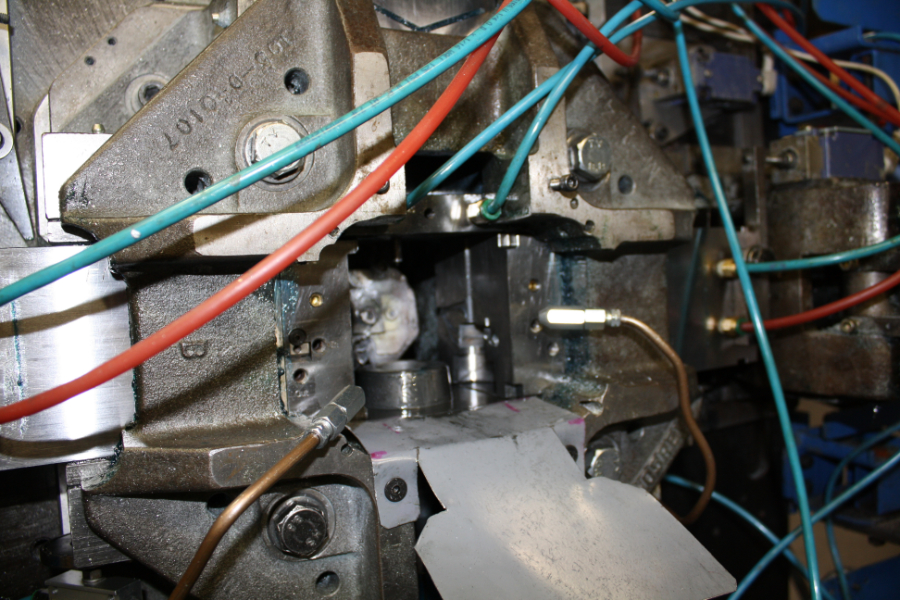
Miniature and sub-miniature die casting is a precision fabricating process offering extremely tight tolerances and cost-effective production. Miniature Casting Corporation. (MCC), using four-slide die casting machines, produces complex components under 41.5 inches in any direction, with virtually no minimum-size restrictions. Contact us to learn more.
Just as die casting offers advantages over other manufacturing processes, zinc provides advantages over other die casting alloys. Zinc die casting alloys are stronger, tougher and more ductile than die castings in aluminum or magnesium. Zinc alloys can be used to cast extremely small, complex shapes. They can be cast smoother, easier, more accurately, and at lower cost. Zinc die castings can be readily painted and more easily plated than aluminum or magnesium alloys. Zinc’s low melting po int prolongs die life, even into the millions of parts.
Miniature zinc die casting provides component designers and users the following benefits:

Low Component Cost

Tight Dimensional Tolerances

Fast Production Cycle Times

Thin Wall Sections

High Mechanical Properties

Good Physical Properties

Ability to Design Intricate Configurations

Excellent Surface Quality and Finishing Characteristics
The Casting
Process
Zinc casting alloys enable the product engineer and designer to produce components using a wide range of casting processes and to supply quantities ranging from one to millions per year. In fact, zinc alloys surpass all other ferrous and nonferrous alloys in casting-process flexibility.